
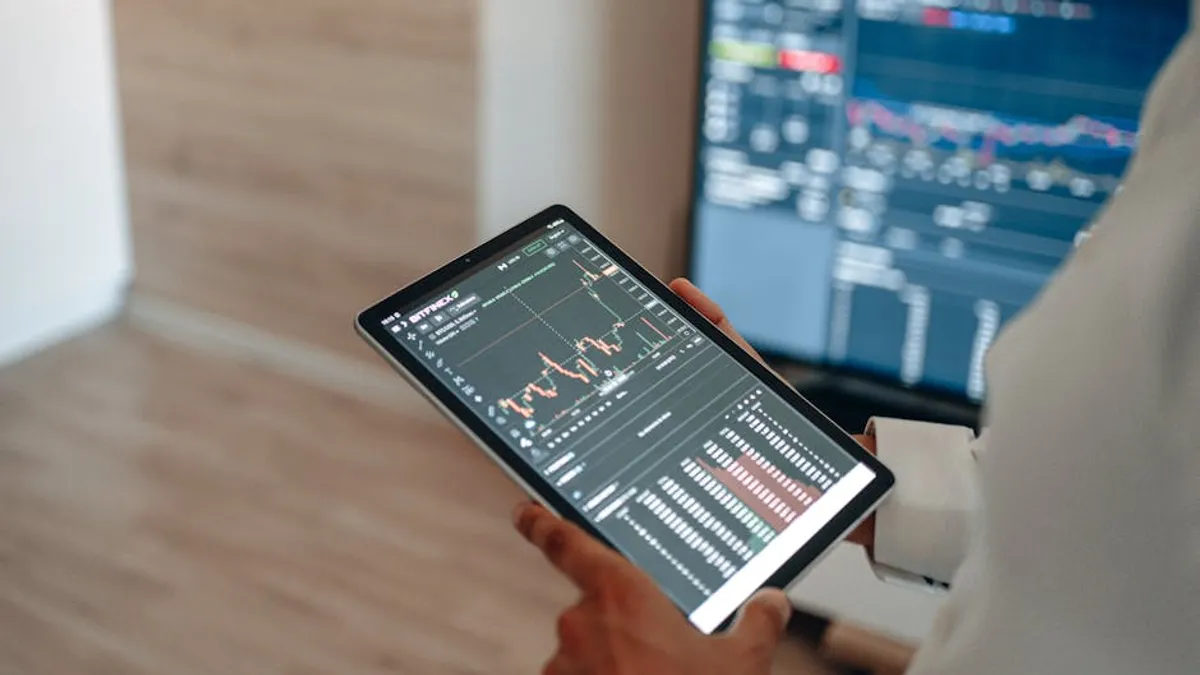
Understanding and leveraging real-time financial updates is critical for any entity operating within or reporting on financial markets. These updates deliver immediate data streams, offering a snapshot of market conditions, asset prices, and economic indicators as they evolve, rather than after a delay. For businesses, investors, and content creators, the distinction between real-time and delayed data can mean the difference between informed decision-making and missed opportunities or outdated content. This guide explores the fundamental meaning of real-time financial updates, their diverse applications, and the key considerations for their effective utilization.
Defining Real-time Financial Updates
Real-time financial updates refer to data feeds that provide information with minimal to no latency from the moment an event occurs or a data point is recorded. This immediacy contrasts sharply with delayed data, which might have a lag of minutes, hours, or even days. In financial contexts, "real-time" typically means data is delivered within milliseconds or seconds of its generation. The value lies in its direct reflection of current market sentiment and activity, enabling rapid response to changing conditions.
Key characteristics include:
- Immediacy: Data is available almost instantaneously after an event (e.g., a stock trade, an economic report release).
- Accuracy: Reflects the most current state of the market, reducing the risk of decisions based on stale information.
- Volume: Often involves continuous streams of data, requiring robust infrastructure for processing and analysis.
- Volatility reflection: Captures rapid price movements and market shifts as they happen.
Core Uses Across Financial Sectors
The applications of real-time financial updates span various sectors, driving operational efficiency, strategic decision-making, and content relevance. Each use case emphasizes the need for speed and precision.
Algorithmic Trading and High-Frequency Trading (HFT)
For quantitative trading firms, real-time data is the bedrock of their operations. Algorithms are programmed to execute trades based on specific market conditions, which are identified using immediate price feeds, order book data, and news sentiment. HFT strategies, in particular, rely on sub-millisecond data delivery to capitalize on fleeting price discrepancies across exchanges.
Impact: Enables automated execution, arbitrage opportunities, and rapid response to market events without human intervention delays.
Investment Management and Portfolio Monitoring
Portfolio managers and institutional investors utilize real-time updates to monitor the performance of their holdings, assess risk exposures, and rebalance portfolios. Immediate alerts on significant price movements, news related to specific assets, or changes in economic indicators allow for proactive adjustments to investment strategies.
Benefit: Facilitates timely risk mitigation and optimization of returns by reacting to market shifts as they unfold.
Financial News and Content Publishing
Publishers and financial news outlets rely on real-time data to deliver breaking news, market summaries, and analytical content that remains current. This includes live reporting on earnings calls, economic data releases, and geopolitical events that impact markets. For SEO professionals, incorporating and citing real-time data can enhance content authority and topical relevance, especially for time-sensitive financial queries.
Commercial Value: Increases audience engagement, establishes credibility as a primary source, and supports higher search visibility for topical financial content.
Risk Management and Compliance
Financial institutions employ real-time data for continuous risk assessment, including market risk, credit risk, and operational risk. Monitoring real-time trading volumes, volatility, and counterparty exposures helps identify potential threats and ensure compliance with regulatory requirements, such as capital adequacy ratios or trading limits.
Function: Provides immediate insights into potential breaches or exposures, allowing for rapid intervention and adherence to regulatory frameworks.
Pro Tip: When integrating real-time financial updates into a website or application, prioritize data source reliability and API stability. Unreliable feeds or frequent outages can lead to inaccurate information display, undermining user trust and potentially impacting financial decisions.
Key Details and Implementation Considerations
Implementing and utilizing real-time financial updates involves several technical and strategic considerations.
Data Sources and Providers
Real-time data is typically sourced from specialized financial data providers who aggregate information directly from exchanges, regulatory bodies, and news agencies. These providers often offer data via APIs (Application Programming Interfaces) or dedicated data feeds, allowing for integration into various platforms and applications.
Evaluation factors: Data coverage (assets, markets), latency, API documentation, support, and pricing models.
Infrastructure and Technology
Processing real-time financial data demands robust infrastructure capable of handling high data volumes and velocities. This often involves low-latency networks, powerful servers, and specialized databases optimized for time-series data. Cloud-based solutions are increasingly popular for their scalability and flexibility in managing fluctuating data loads.
Technical requirement: Systems must be designed for resilience, redundancy, and fast processing to maintain data integrity and availability.
Data Normalization and Analysis
Raw real-time data can be complex and come in various formats. Normalization—the process of converting diverse data into a consistent format—is crucial for effective analysis. Advanced analytical tools, including machine learning algorithms, are then employed to extract actionable insights, identify patterns, and predict market movements.
Process: Cleansing, structuring, and applying analytical models to transform raw data into intelligence.
Regulatory Compliance and Data Licensing
Accessing and distributing real-time financial data often involves strict licensing agreements and adherence to regulatory requirements. Different exchanges and data providers have specific terms of use, and compliance with data privacy laws (e.g., GDPR, CCPA) is also essential, especially when dealing with user-specific financial information.
Mandate: Ensure all data usage aligns with legal obligations and provider agreements to avoid penalties or service disruption.
Maximizing Value from Real-time Financial Information
To effectively leverage real-time financial updates, organizations must move beyond mere data consumption to strategic application. This involves fostering a data-driven culture, investing in appropriate technological infrastructure, and continuously refining analytical models. For content creators, it means integrating live data points, developing dynamic content strategies, and ensuring rapid publishing workflows. The goal is to transform immediate data into immediate, informed action, whether that's executing a trade, adjusting a portfolio, or publishing a critical market update.
Frequently Asked Questions About Real-time Financial Updates
What is the primary difference between real-time and delayed financial data?
Real-time data is delivered almost instantaneously as events occur, typically within milliseconds or seconds, reflecting current market conditions. Delayed data, conversely, has a significant lag, often minutes or hours, and reflects past market states.
Who benefits most from real-time financial updates?
High-frequency traders, algorithmic trading firms, institutional investors, portfolio managers, financial news organizations, and risk management departments benefit significantly due to their need for immediate, accurate market information for decision-making and reporting.
Are there any challenges associated with using real-time financial data?
Yes, challenges include managing high data volumes, ensuring low-latency infrastructure, selecting reliable data providers, normalizing diverse data formats, and adhering to complex data licensing and regulatory compliance requirements.
How do real-time updates impact content creation for financial publishers?
They enable publishers to deliver timely, relevant news and analysis, enhancing credibility and audience engagement. This immediacy is crucial for covering breaking market events, economic reports, and company earnings, directly impacting content authority and search visibility.